On This Day… In 2014, A Rarity At Peak Rail

BR Mk.1 SLF E2080-20140111 (Peak Rail)British Railways Mk.1 Sleeper First (SLF) E2080
Peak Rail, 11 January 2014

While British Railways Mk.1 passenger carriages are incredibly commonplace on heritage railways, Mk.1 sleeping carriages are definitely a rarity with (as far as I’m aware) only six still in existence.

Most were built with asbestos insulation, which was expensive to remove professionally and so were sold for scrap but a few were bought by preservation societies for use as volunteer accommodation.

E2080 was built in 1959 by Metropolitan-Cammell Carriage & Wagon Co Ltd and was preserved in 1983, initially on the Dart Valley Railway (now the South Devon Railway) before moving to Peak Rail in the late 1980s.

When I visited Peak Rail in April last year it was still undergoing restoration.

On This Day… A curiosity at the Bo’ness & Kinneil Railway

My (so far, only) visit to the Bo’ness & Kinneil Railway has featured here before but this vehicle is something I’d pretty much forgotten about.

19001-20181102b
19001
Bo’ness, 2 November 2018

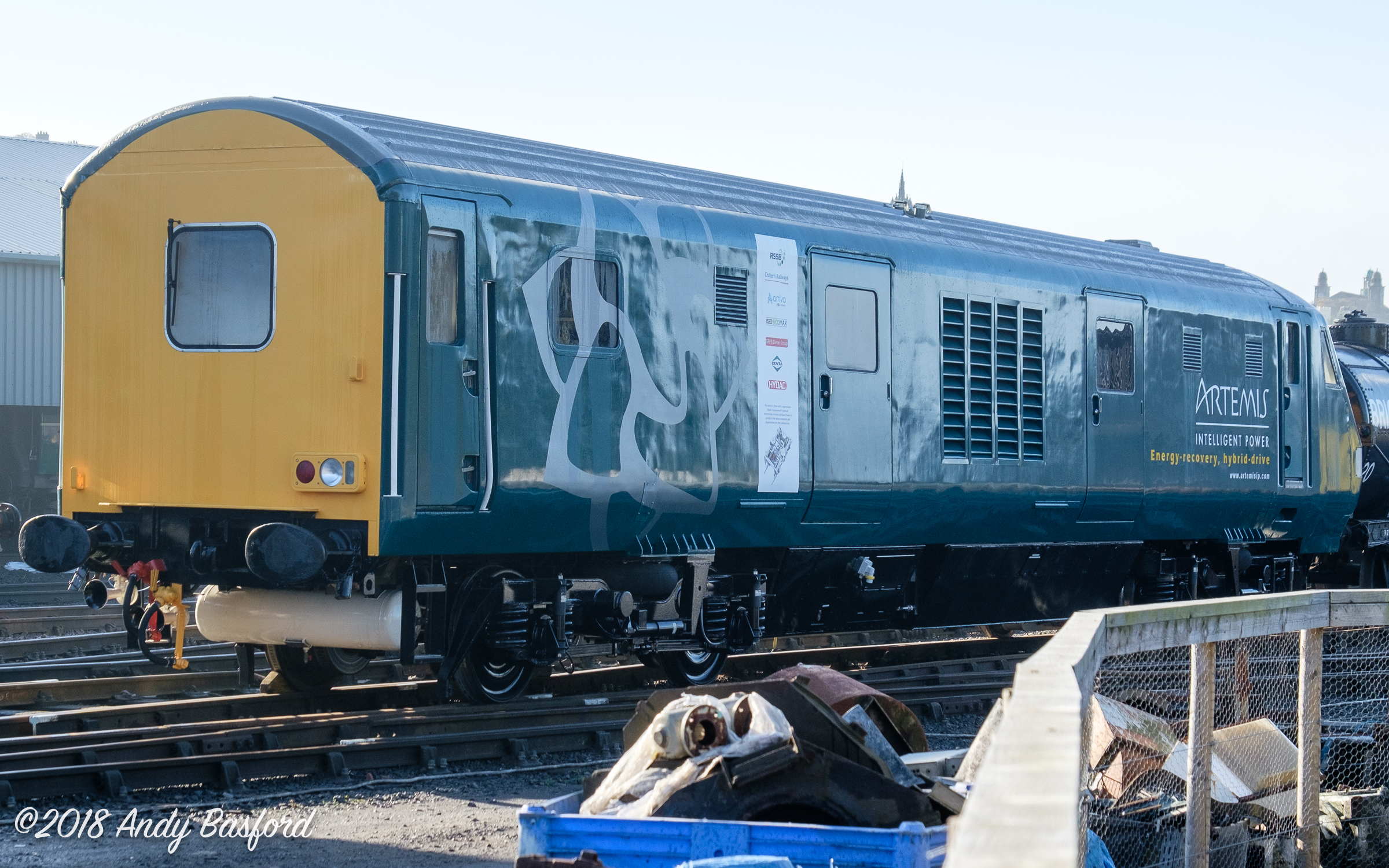
Previously used on West Coast Main Line (WCML) services this Mk.3b Driving Van Trailer, number 82113, was being used by Artemis Intelligent Power to test the viability of using hydrostatic transmission to reduce engine emissions and had been fitted with two JCB diesel engines and…

19001-20181102a
19001
Bo’ness, 2 November 2018

A second driving cab.

Following conversion 82113 was renumbered as a diesel locomotive and allocated the TOPS number 19001. Since my visit it’s changed hands and is being/has been used to carry out magnetic wheel adhesion testing by Lenz Labs of Edinburgh.

Spotted Today – D7659 (25309) at Peak Rail

Class 25 D7659-20230407 (Peak Rail)Class 25/3 D7659 (25309)
Rowsley South, Peak Rail, 7 April 2023

D7659 was the final Class 25 locomotive built by Beyer, Peacock & Co Ltd (in 1966) and had a fairly uneventful pre-preservation career.

Renumbered 25309 under British Rail’s TOPS system in April 1974 and again (to 25909) in December 1985, withdrawal beckoned in September 1986. After asbestos removal the locomotive left Vic Berry’s scrapyard in Leicester on 2 June 1988 for display at Coalville Open Day on 4 June before moving into preservation at the East Lancashire Railway (ELR).

Now owned by pop impresario Pete Waterman, D7659 is based at Peak Rail in Derbyshire and today hauled three return trips between Rowsley South and Matlock, the above pic is of the 13.00 departure from Rowsley South.

From the Archives – ‘Daisy’ at the Midland Railway-Butterley

Is it really over four months since I posted anything here? 😬

Clearly, one of my New Year’s resolutions for 2023 must be to post more often!

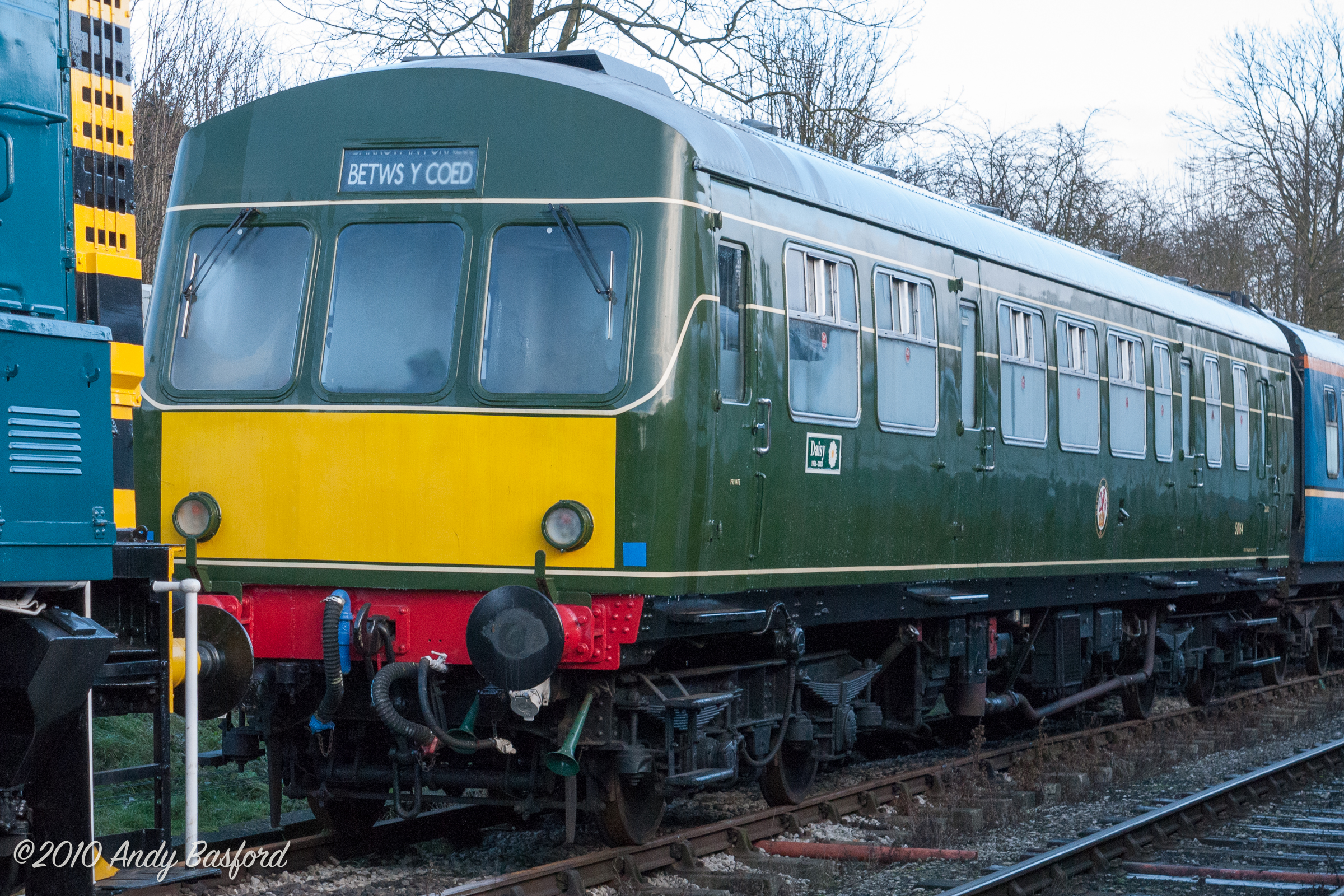
Class 101 DMBS 50164-20100101 (Midland Railway-Butterley)
Class 101 DMBS 50164 Daisy
Midland Railway-Butterley, 1 January 2010

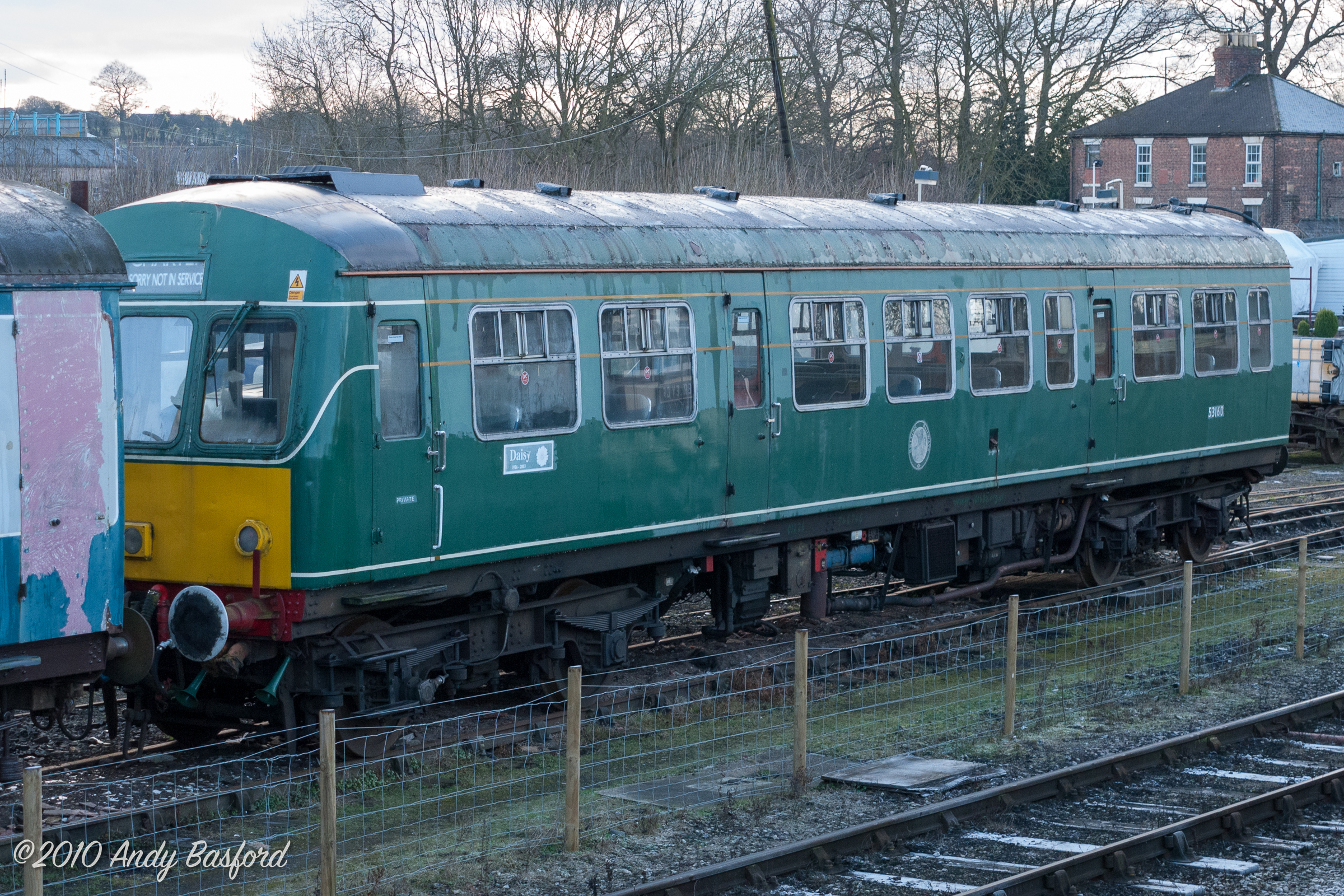
These two class 101 diesel multiple unit (DMU) vehicles formed set no.101685 and were amongst the last five class 101 sets to be withdrawn from service by First North Western in December 2003.

Built by Metro-Cammell in 1956, 101685 had regained its early British Railways livery in 1994 and was named Daisy (unofficially) after the diesel railcar in The Railway Series books by the Rev. W. Awdry.

Class 101 DMCL 53160-20100101 (Midland Railway-Butterley)
Class 101 DMCL 53160 Daisy
Midland Railway-Butterley, 1 January 2010

Both vehicles are now preserved at the North Yorkshire Moors Railway

Spotted Yesterday – D6700 at the Great Central Railway

Class 37 D6700 (37119, 37350)-20220821D6700 (37119, 35350)
Loughborough Central (GCR), 21 August 2022
Having arrived with train 2B25, the 14.45 departure from Leicester North

I spent an enjoyable hour at Loughborough Central station on the Great Central Railway yesterday, mainly because I wanted to photograph the first built Class 37 (or English Electric type 3) diesel locomotive, D6700, which is currently on loan from the National Railway Museum in York.

Built by the English Electric Co Ltd at Vulcan Foundry, D6700 entered service in December 1960 and was first allocated to Stratford Depot (30A) in East London.

Renumbering under the TOPS scheme (to 37119) followed in February 1974 and again (to 37350) in March 1988 (when it was fitted with regeared cast frame type CP7 bogies).

Repainted back into green livery in August 1988 ‘D6700’ became something of a celebrity and appeared at many open days before acquiring the name NRM NATIONAL RAILWAY MUSEUM in November 1998.

Withdrawal followed in December 1999 and D6700 was claimed for preservation by the NRM.

On St Andrew’s Day – The Bo’ness & Kinneil Railway

A small selection of photos taken during my only visit (so far) to the Bo’ness & Kinneil Railway (B&KR) back in 2018.

27001-20181102a27001
Bo’ness, 2 November 2018

27001 (the former D5347) was first allocated to Thornton Junction shed (62A) in June 1961 but was almost immediately reallocated to Glasgow Eastfield (65A, later ED), spending the rest of its working life allocated to either Eastfield or Edinburgh Haymarket sheds (64B, later HA).

I don’t think I ever saw a ‘McRat’ (as the class 27s were known) in BR days but would have loved to have seen them on their regular stomping ground of the West Highland Line.

CR 439 class 0-4-4T 419-20181102Caledonian Railway 439 class 0-4-4T No.419
Bo’ness, 2 November 2018

No.419 was built at the Caledonian Railway’s St. Rollox Works in 1907 and remained in service (first with the London Midland & Scottish Railway, then British Railways) until December 1962 when it was withdrawn from Carstairs shed (66E).

The beautifully restored flagship of the Scottish Railway Preservation Society (SRPS) fleet had spent nine years undergoing overhaul and had only returned to traffic the month prior to my visit.

AB 16in 0-4-0ST No.6 (works no.2043 of 1937)-20181102Andrew Barclay, Sons & Co Ltd 16in 0-4-0ST No.6 (works no.2043 of 1937)
Bo’ness, 2 November 2018

You can’t have a collection of Scottish locomotives without a ‘Wee Pug’ and this Andrew Barclay, Sons & Co Ltd 0-4-0ST (works no.2043 of 1937) fits the bill perfectly!

Built for United Collieries Ltd (as their No.4) it worked at various locations before ending up at Kinneil Colliery in the late 1970s from where it entered preservation, initially at the Prestongrange Mining Museum. Owned by East Lothian Council it is currently awaiting overhaul.

On This Day… A couple of oddities at Ruddington

Nine years ago I visited the Great Central Railway – Nottingham (GCRN) at Ruddington and was intrigued by a couple of strange railway vehicles…

Laboratory 1, RDB 975000-20120715bLaboratory 1, RDB 975000
Ruddington, Great Central Railway – Nottingham, 15 July 2012

RDB 975000 (Laboratory 1) was converted from a British Railways Mk.1 Restaurant Second Open (RSO) in 1970 by the Research & Development Department at the Railway Technical Centre (RTC) at Derby for use as a high speed dynamics laboratory.

The lowered section of roof could be fitted with a pantograph (used to collect power from overhead lines) which could then be observed in operation through the windows in the roof visible in the image below.

Laboratory 1, RDB 975000-20120715aLaboratory 1, RDB 975000
Ruddington, Great Central Railway – Nottingham, 15 July 2012

After lying out of use at Derby for many years RDB 975000 entered preservation at Ruddington in May 2011 but was scrapped in November 2013.

Observation Saloon 6300 HEBRIDEAN-20120715Observation Saloon 6300 HEBRIDEAN
Ruddington, Great Central Railway – Nottingham, 15 July 2012

6300 HEBRIDEAN was built as Class 101 Diesel Multiple Unit (DMU) Driving Trailer Composite Lavatory (DTCL) 56356 in 1958 but converted in 1987 for use as a locomotive-hauled observation saloon on the Inverness-Kyle of Lochalsh ‘Hebridean’ services.

Withdrawn in 1994, 6300 was initially preserved at the Gloucestershire Warwickshire Steam Railway before moving to Ruddington but has since moved again, to the Barry Tourist Railway.

On the Narrow Gauge – ‘Z’ is for… ZM32

From my last post’s ‘A’ for ‘Andrew Barclay, Sons & Co. Ltd.’ all the way to the other end of the alphabet today!

Sorting through many years worth of digital images at the moment and I came across pics from two visits (in 2009 and 2011) to the Steeple Grange Light Railway (SGLR) near Wirksworth in Derbyshire.

RH 4wDM ZM32 'HORWICH' (works no.416214 of 1957)-20090531Ruston & Hornsby Ltd 18in gauge 4wDM ZM32 ‘HORWICH’ (works no.416214 of 1957)
Steeple Grange Light Railway, May 2009

ZM32 has called the SGLR home since 1997 and is one of a very small number of narrow gauge locomotives that were owned and operated by British Railway (BR).

The Ruston & Hornsby Ltd. 20hp LAT class diesel loco (works no.416214 of 1957) was supplied new to the former Lancashire & Yorkshire Railway’s (L&YR) Horwich Locomotive Works for use on the extensive 18in gauge system there (where eight 0-4-0ST steam locos had previously been employed). It worked there until 1965 after which it went into store (following a failed attempt to export it to British Honduras).

Purchased by R.P. Morris in 1971, ZM32 was restored and re-gauged (to 2ft) and operated at Gloddfa Ganol, a working quarry and tourist attraction in Blaenau Ffestiniog in North Wales before finally moving to the SGLR where it has been re-gauged (again) to 18in, named ‘HORWICH’ and painted into BR lined green livery.

RH 4wDM ZM32 'HORWICH' (works no.416214 of 1957)-20110710Ruston & Hornsby Ltd 18in gauge 4wDM ZM32 ‘HORWICH’ (works no.416214 of 1957)
Steeple Grange Light Railway, July 2011

‘HORWICH’ is often in charge of passenger trains on the 1 in 27 gradient ‘Killer’s Branch’ at the SGLR.