‘Join the Ghost Train’ at Dundee

'ScotRail Join the Ghost Train' vinyl adorning 170425-20171026 (Dundee)
‘Join the Ghost Train’ vinyl adorning 170425
Dundee, 26 October 2017

Although I’m not a huge fan of Halloween (or All Hallows’ Eve as it’s known in Scotland) it was nice to see ScotRail getting into the ‘spirit’ of things back in October 2017.

170425 & 170475-20171026b (Dundee)
170425 & 170475
Dundee, 26 October 2017

170425 later departed with train 1T82, the 12.13 Saturdays & Sundays excepted (SSuX) service to Glasgow Queen Street.

From the Archives – ‘Daisy’ at the Midland Railway-Butterley

Is it really over four months since I posted anything here? 😬

Clearly, one of my New Year’s resolutions for 2023 must be to post more often!

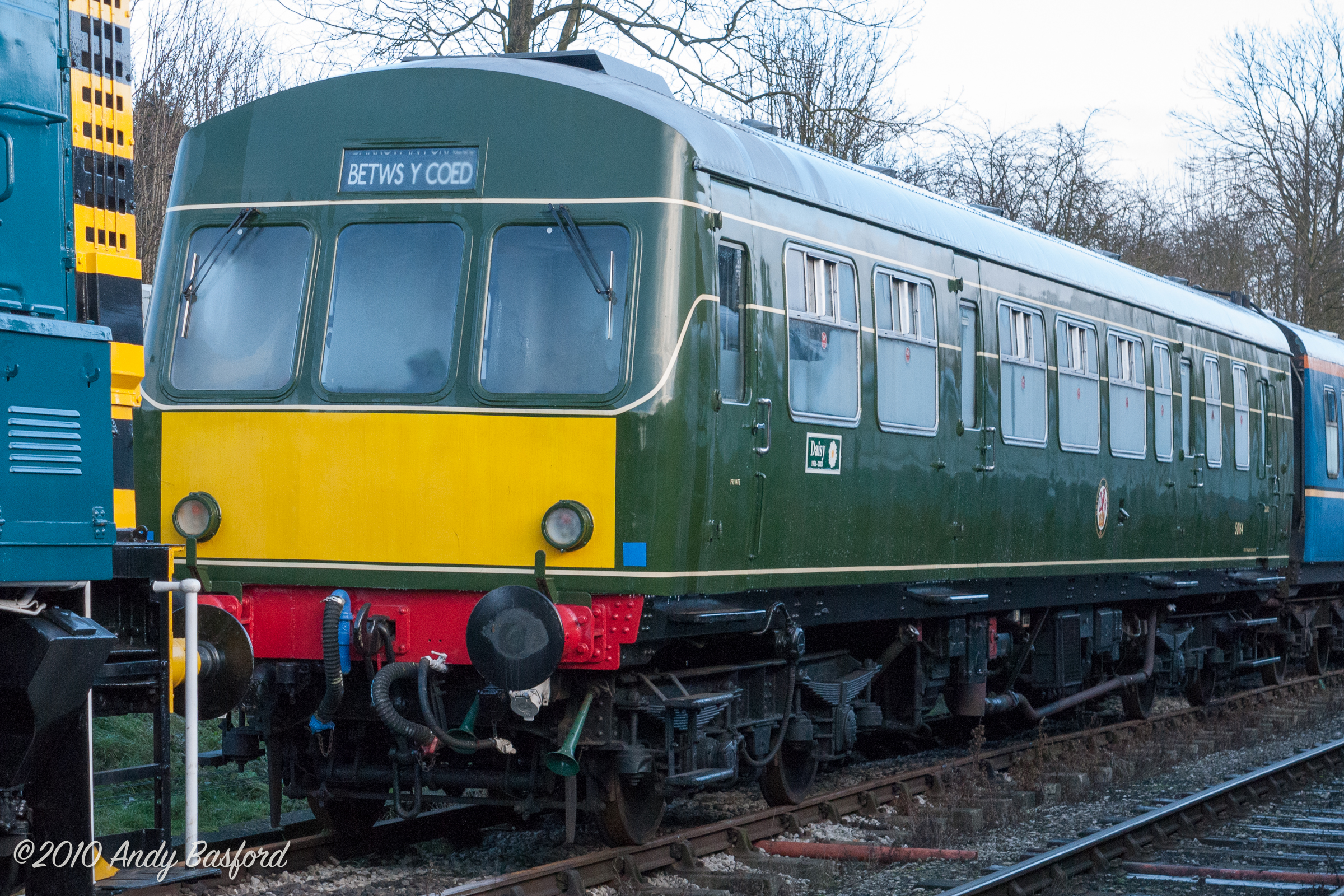
Class 101 DMBS 50164-20100101 (Midland Railway-Butterley)
Class 101 DMBS 50164 Daisy
Midland Railway-Butterley, 1 January 2010

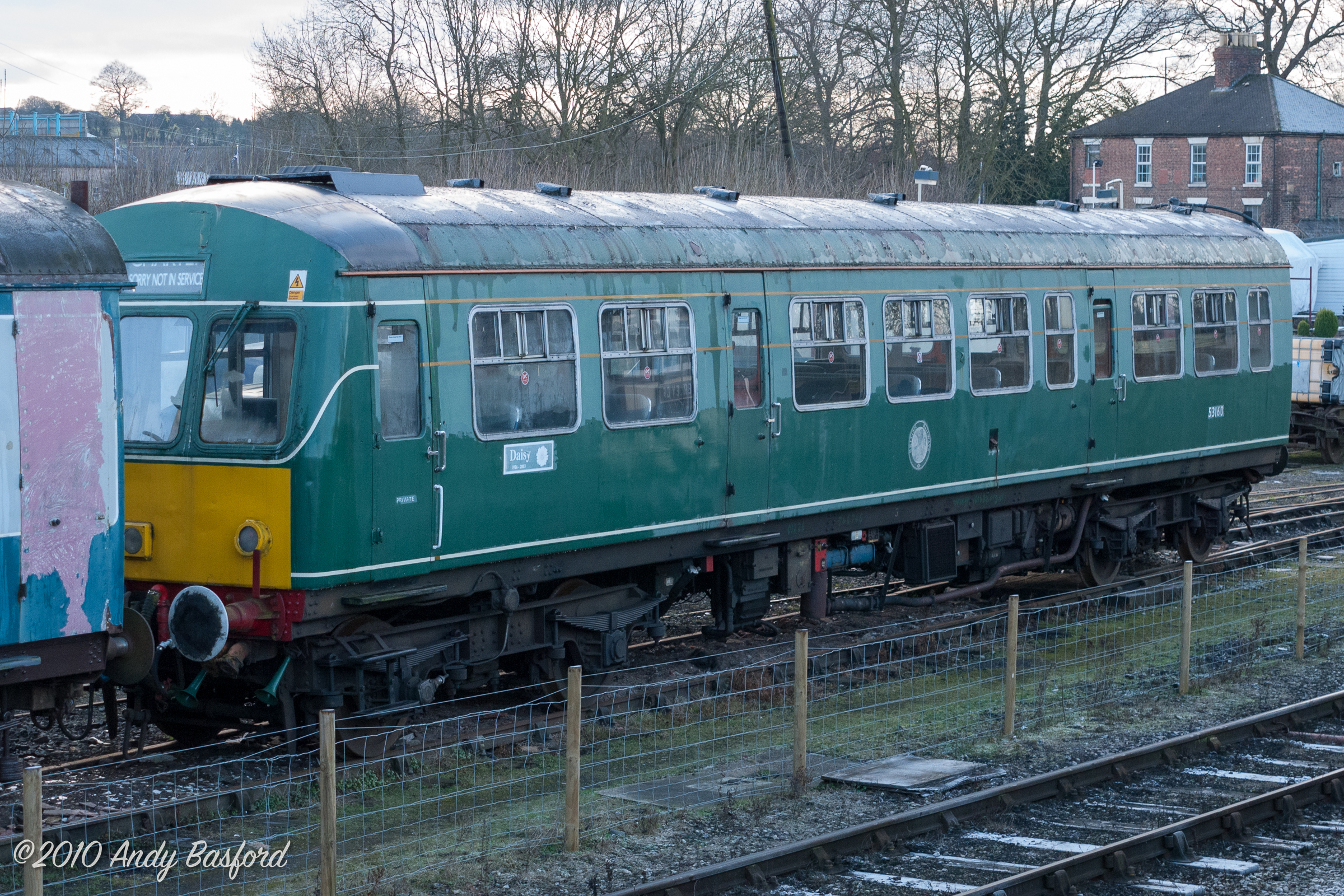
These two class 101 diesel multiple unit (DMU) vehicles formed set no.101685 and were amongst the last five class 101 sets to be withdrawn from service by First North Western in December 2003.

Built by Metro-Cammell in 1956, 101685 had regained its early British Railways livery in 1994 and was named Daisy (unofficially) after the diesel railcar in The Railway Series books by the Rev. W. Awdry.

Class 101 DMCL 53160-20100101 (Midland Railway-Butterley)
Class 101 DMCL 53160 Daisy
Midland Railway-Butterley, 1 January 2010

Both vehicles are now preserved at the North Yorkshire Moors Railway

From the Archives – DUMBLETON HALL

I recently read that Great Western Railway (GWR) 4900 ‘Hall’ class 4-6-0 4920 DUMBLETON HALL had been bought by Warner Brothers and exported to Japan for display in the Harry Potter exhibit at Warner Bros Studios Tour in Tokyo.

GWR 4900 class 4-6-0 4920 DUMBLETON HALL-20130807GWR 4900 class 4-6-0 4920 DUMBLETON HALL
South Devon Railway, 7 August 2013

Built at the Great Western Railway’s Swindon Works in 1929, 4920 was withdrawn from Bristol Barrow Road shed by British Railways in December 1965 and sent for scrap. Preservation beckoned in June 1976 and 4920 became the 82nd departure from Barry scrapyard, finally returning to steam in 1992 on the Paignton & Dartmouth Steam Railway (now known as the Dartmouth Steam Railway).

The locomotive’s owners subsequently purchased the Dart Valley Railway (now known as the South Devon Railway) and 4920 was loaned to various heritage lines before returning to the Dartmouth Steam Railway where it was last steamed in October 1999 before moving to Buckfastleigh on the SDR for storage.

Above is the only pic I have (and now likely will ever have) of 4920, taken during a flying visit to the SDR in August 2013.

From the Archives – Welford and Kilworth Platform Shelter

Last week I spent a couple of days chugging along the Grand Union Canal on a narrow boat, setting off from North Kilworth Marina in Leicestershire. Whilst looking at our route on the Ordnance Survey map I noticed a dismantled railway line immediately west of the marina and naturally (for me anyway) I did a little research and discovered there had been a station nearby…

Welford and Kilworth platform shelter (ERM)-20130525Welford and Kilworth platform shelter
Electric Railway Museum, 25 May 2013

Welford and Kilworth station, on the London & North Western Railway (LNWR) line from Rugby to Stamford, opened on 1 May 1950 and had an uneventful existence until closure on 6 June 1966 and although the main station buildings were demolished, the down (Stamford-bound) platform shelter (dating from 1878) survived and ended up on display at the Electric Railway Museum at Coventry (where the above photo was taken during an open day in 2013.)

Sadly the museum was forced to close in 2017 but most, if not all the exhibits were found new homes and I believe the shelter ended up at the Battlefield Line.

From the Archives – In Dublin’s Fair City…

It being St Patrick’s Day today I thought I’d raid my archives and post a few pics taken during a trip to Dublin that Dad and I took way back in 2004.

An early flight and a quick bus journey got us to Dublin Connolly station/Stáisiún Uí Chonghaile by mid-morning and we spent some time photographing the Irish Rail/Iarnród Éireann diesel locos that were pottering about…

Iarnród Éireann 141 class Bo-Bo DE 156-20040630Iarnród Éireann 141 class Bo-Bo Diesel Electric 156
Dublin Connolly station/Stáisiún Uí Chonghaile, 30 June 2004

Locomotive shed at Dublin Connolly/Stáisún Uí Chonghaile-20040630The locomotive shed at Dublin Connolly station/Stáisiún Uí Chonghaile, 30 June 2004

Then a tip-off from a member of station staff led us around the corner to see this…

LMS (NCC) class WT 2-6-4T No.4-20040630LMS (NCC) class WT 2-6-4T No.4, 30 June 2004

No.4, a Class WT 2-6-4T, was built at Derby in 1947 for the London Midland & Scottish Railway’s Northern Counties Committee. Preserved by the Railway Preservation Society of Ireland No.4 was (and still is) regularly in use on special trains on the main line.

A less friendly member of staff then told us to ‘clear off!’ so we had a ride down the coast to Greystones station/Stáisiún na Clocha Liatha on a class 2800 DMU (returning on the Dublin Area Rapid Transit unit seen below).

Greystones station/Stáisiún na Clocha Liatha-20040630Greystones station/Stáisiún na Clocha Liatha with DART 8510 class 8614 heading for Howth in the platform, 30 June 2004

A dash back across Dublin gave us enough time to take a few photos at Heuston station/Stáisiún Heuston (and enjoy a pint of Guinness!) before our flight home.

Iarnród Éireann 201 class Co-Co DE 234-20040630Iarnród Éireann 201 class Co-Co Diesel Electric 234 RIVER AHERLOW/ABHAINN NA HEATHARLAÍ
Dublin Hueston station/Stáisiún Heuston, 30 June 2004

Sláinte!

From the Archives – Caledonian Sleeper

In my previous post I briefly mentioned the Caledonian Sleeper service that links London with Aberdeen, Fort William and Inverness.

Two trains depart from London Euston six days each week, the Highland Sleeper is made up of three portions that divide at Edinburgh to serve routes to Aberdeen, Inverness and Fort William. The Lowland Sleeper has two portions serving routes to Edinburgh Waverley and Glasgow Central.

15 years ago a holiday at Banavie gave me an opportunity to photograph the portion that winds its way through the Highlands to and from Fort William.

37417-2005090337417
Fort William station, 3 September 2005

Monday 3 September saw a rather tatty 37417 Richard Trevithick stabled beside the station with a five coach train, the last vehicle of which was British Rail Mk.3 Sleeping Car with Pantry (SLEP) 10506.

BR Mk.3a SLEP 10506-20050903BR Mk.3a SLEP 10506
Fort William station, 3 September 2005

The diesel loco only works the train as far as Edinburgh, where an electric loco takes over, so I wasn’t surprised to see 37417 return the following day.

37417-2005090437417
Fort William station, 4 September 2005

The next day brought a loco with a more ‘Scottish’ name to Fort William in the shape of 37406 The Saltire Society (The Saltire Society is an organisation which aims to promote the understanding of the culture and heritage of Scotland).

37406 (nameplate)-2005090537406
Fort William station, 5 September 2005

37406-2005090537406
Fort William station, 5 September 2005

37406 returned the next morning and was stabled beside the station with its train and I grabbed a quick pic of British Rail Mk.2e Unclassified Open Brake (BUO) 9809 (for passengers not making use of the Mk.3’s bunks) before heading off for the day.

BR Mk.2e BUO 9809-20050906BR Mk.2e BUO 9809
Fort William station, 6 September 2005

The sleeper service continues but the Class 37s and BR built coaches are no longer in use… The 37s were replaced in 2006 by Class 67 diesels (themselves replaced in 2019 by Class 73/9 electro-diesels) and the coaches by brand new CAF-built ‘Mk.5’ stock that also entered service in 2019.

From the Archives – M&GN Joint Railway Society members’ day, October 2011

A quick follow up to my previous post

Another image of the Great Eastern Railway (GER) bogie tramcar No.7 at the North Norfolk Railway (NNR), captured during the M&GN Joint Railway Society members’ day on 1 October 2011.

LNER class J15 0-6-0 65462-20111001LNER class J15 0-6-0 65462 approaches Bridge No.303
North Norfolk Railway, October 2011

Here the society’s London & North Eastern Railway (LNER) J15 class 0-6-0 steam locomotive 65462 (built as class Y14 No.564 by the GER at Stratford Works in 1912) approaches Bridge No.303, east of Weybourne, with what I believe was the last service of the day. No.7 is clearly visible as the first vehicle in the train.

And this is the view of 65462 from the balcony of No.7, captured earlier in the day!

View from the balcony of GER Bogie Tramcar No.7-20111001View from the balcony of GER Bogie Tramcar No.7
Sheringham station, North Norfolk Railway, October 2011

(My face was covered in smuts from the loco after I’d travelled the full length of the line standing on said balcony…)

65462 was withdrawn from British Railways service in September 1962 and initially stored at Devons Road Depot in Bow, East London. Short spells at Stratford (East London) and March (Cambridgeshire) followed before 65462 finally arrived at the NNR on 4 June 1967.

A stalwart at the NNR, 65462 ran for thousands of miles before being withdrawn for significant boiler work in 1989, not returning to traffic until 2002.

In 2015 the locomotive returned to service following another major rebuild which included not only a repaint into full GER blue livery but also a number of modifications that backdate its appearance to ‘as built’ condition.

From the Archives – Wisbech & Upwell Tramway bogie tramcar

Whilst searching for the image of ‘DRAKE’ for my previous post I also turned up this…

Great Eastern Railway bogie tramcar No.7-19990829Great Eastern Railway bogie tramcar No.7
Rutland Railway Museum

It’s the body of Great Eastern Railway (GER) bogie tramcar No.7 that was used on the Wisbech & Upwell Tramway in East Anglia (made famous in the Reverend W. Awdry’s ‘Toby the Tram Engine’ book) and like ‘DRAKE’ was photographed at the Rutland Railway Museum near Cottesmore (now rebranded as Rocks by Rail).

Built at the GER’s Stratford Works in 1884 it was used on the Wisbech & Upwell Tramway until passenger traffic ceased in 1927 when it was transferred to the Kelvedon and Tollesbury Light Railway in Essex. Withdrawn from service in 1951 it spent the following 23 years as an onion store before being preserved.

Acquired by the M&GN Joint Railway Society in 2002 it was restored and fitted with new running gear and now sees occasional use at the North Norfolk Railway (NNR).

Great Eastern Railway bogie tramcar No.7-20111001Great Eastern Railway bogie tramcar No.7
Sheringham station, North Norfolk Railway, October 2011

Readers familiar with the 1953 Ealing comedy The Titfield Thunderbolt will also recognise No.7 as sister vehicle No.8 had a starring role in the film. No.7 is now fitted with a replica of the bar used to persuade Stanley Holloway’s character ‘Walter Valentine’ to finance the railway in the film.

Hudswell Clarke & Co Ltd 'WISSINGTON' (works no.1700 of 1938)-20141004Hudswell, Clarke & Co. Ltd. 0-6-0ST ‘WISSINGTON’ passes Sheringham West signal box (GER No.7 is the first vehicle in the train)
North Norfolk Railway, October 2014

The North Norfolk Railway is also appealing for funds to help them survive the Covid-19 situation… please consider making a donation here.